Issues Lack Ownership
Staff do not know who should investigate, what information is required or when the next update will arrive.
Isoft provides ongoing support, monitoring and planned improvement for the software, integrations and workflows your operation depends on. We resolve issues, reduce recurring friction and deliver practical enhancements in controlled stages.
Users, processes, vendors and business priorities change. Without clear ownership, minor issues accumulate, workarounds return and valuable improvement ideas remain unfinished.
Staff do not know who should investigate, what information is required or when the next update will arrive.
Teams fall back to spreadsheets, messages and duplicate entry when the system no longer fits the real workflow.
APIs, credentials, browsers, devices and third-party platforms change around the solution.
Enhancements are collected without a shared way to compare urgency, effort and operational value.
Background jobs and integrations can fail silently until a customer, invoice or operational hand-off is affected.
Important system and workflow knowledge is lost when it is not documented and shared across the support relationship.
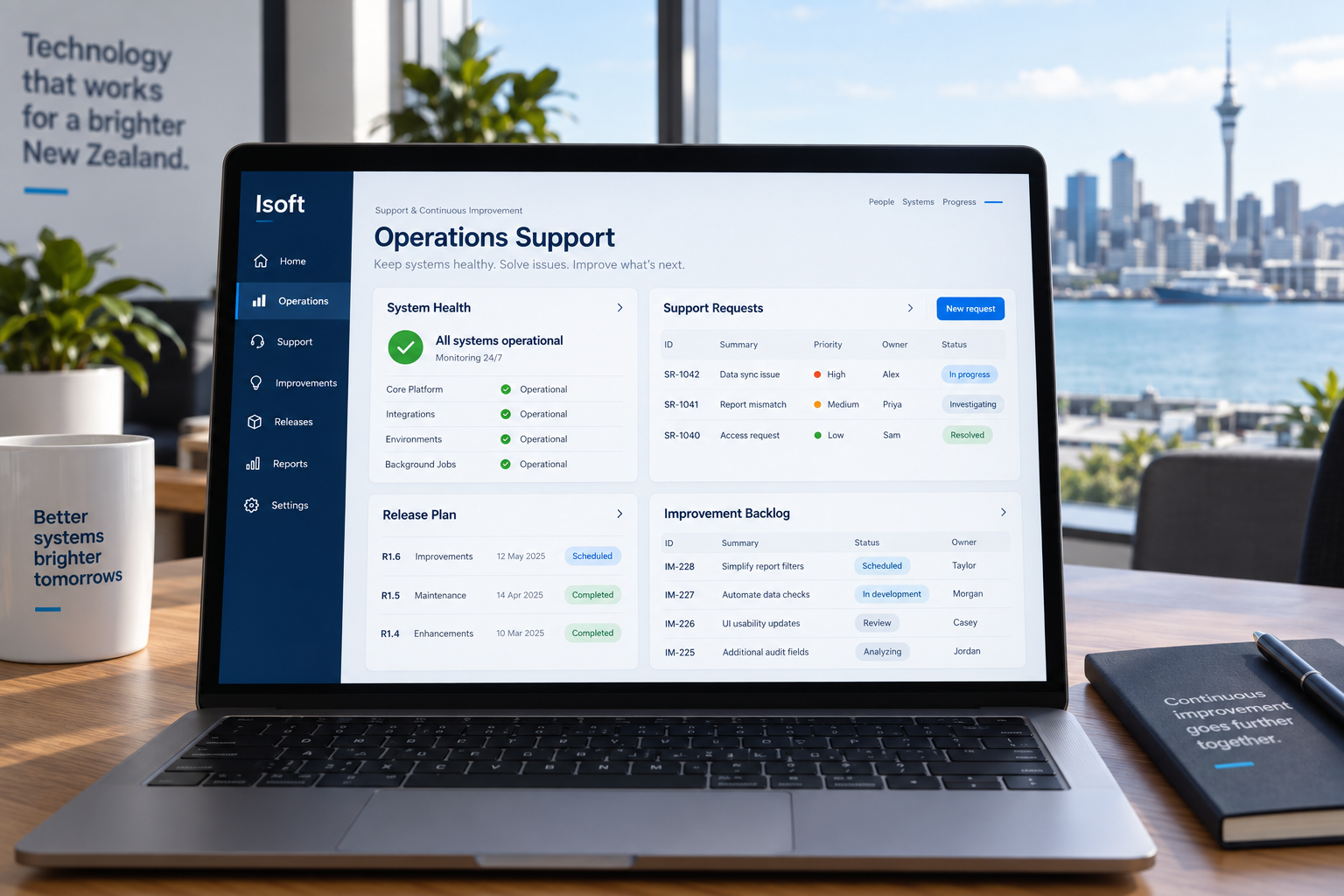
We separate urgent operational support from planned improvement, then manage both through a visible process.
Record the issue, request, affected workflow and business impact.
Confirm urgency, reproduce the problem and identify dependencies or risk.
Agree whether to restore service, schedule a fix or explore an improvement.
Build, test, approve and release the change through a controlled process.
Confirm the outcome, document learning and update the improvement backlog.
Coverage is agreed around the systems, hours, dependencies and business impact involved—not presented as an unlimited promise.
Investigate faults, restore agreed functionality and communicate progress based on the impact and coverage agreed.
Review system health, integrations, logs, dependencies and recurring incidents before they create larger disruption.
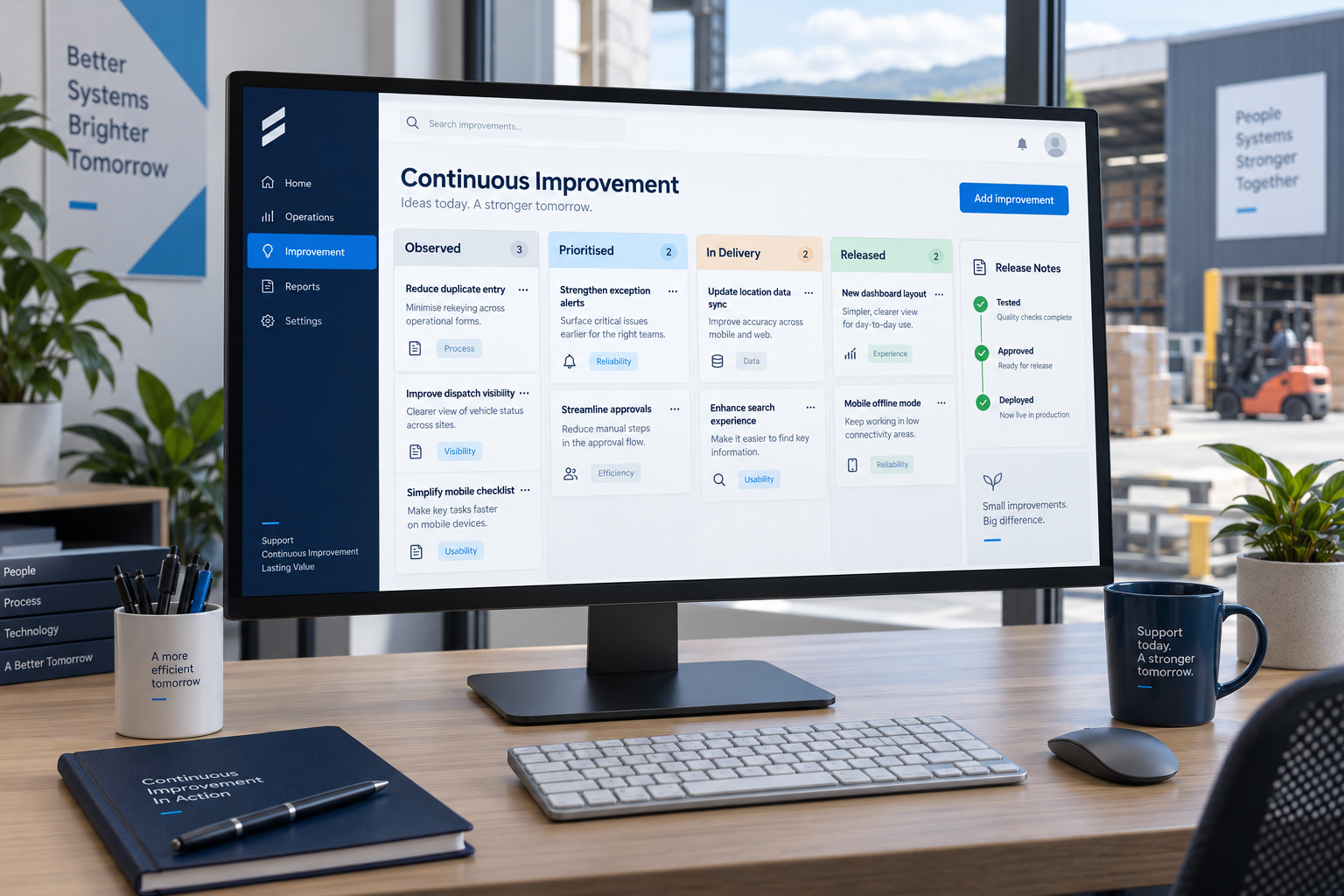
Prioritise and deliver enhancements that reduce manual work, improve visibility or strengthen the user experience.
For an existing Isoft solution—or a business-critical system that needs clearer ownership—we begin by reviewing usage, issues, dependencies and the operational value being achieved.
Understand the system, workflow, users, dependencies, history and present concerns.
Define supported components, contacts, priorities, hours, exclusions and escalation.
Confirm access, environments, documentation, monitoring and request handling.
Review service patterns and agree the next highest-value improvements.
Potentially. We first complete a technical and operational review to understand the codebase, environments, documentation, licensing, security and third-party dependencies before accepting responsibility.
No. The agreement should clearly distinguish covered support, included improvement capacity and separately estimated project work. This protects both priority and budget.
Response targets depend on the agreed support plan, coverage hours and severity definitions. Resolution time also depends on diagnosis, access and third-party involvement, so it should not be promised before the issue is understood.
We consider operational impact, urgency, risk, affected users, implementation effort and dependencies, then agree priorities with the responsible business owner.
Yes, where they are included in scope and appropriate monitoring, access and recovery procedures are established.
We will explain the evidence and options. A major modernisation would be treated as a separately scoped project rather than hidden inside routine support.
Book a Solution Review to assess present usage, operational risks, recurring friction and the right support and improvement model.