Route Capture
Pickup and destination details are captured alongside map context and approximate travel distance.
Isoft delivered three connected digital capabilities for Rickshaw: a responsive customer booking workflow, IoT-assisted attendance capture for school runs and AI chatbot integration.
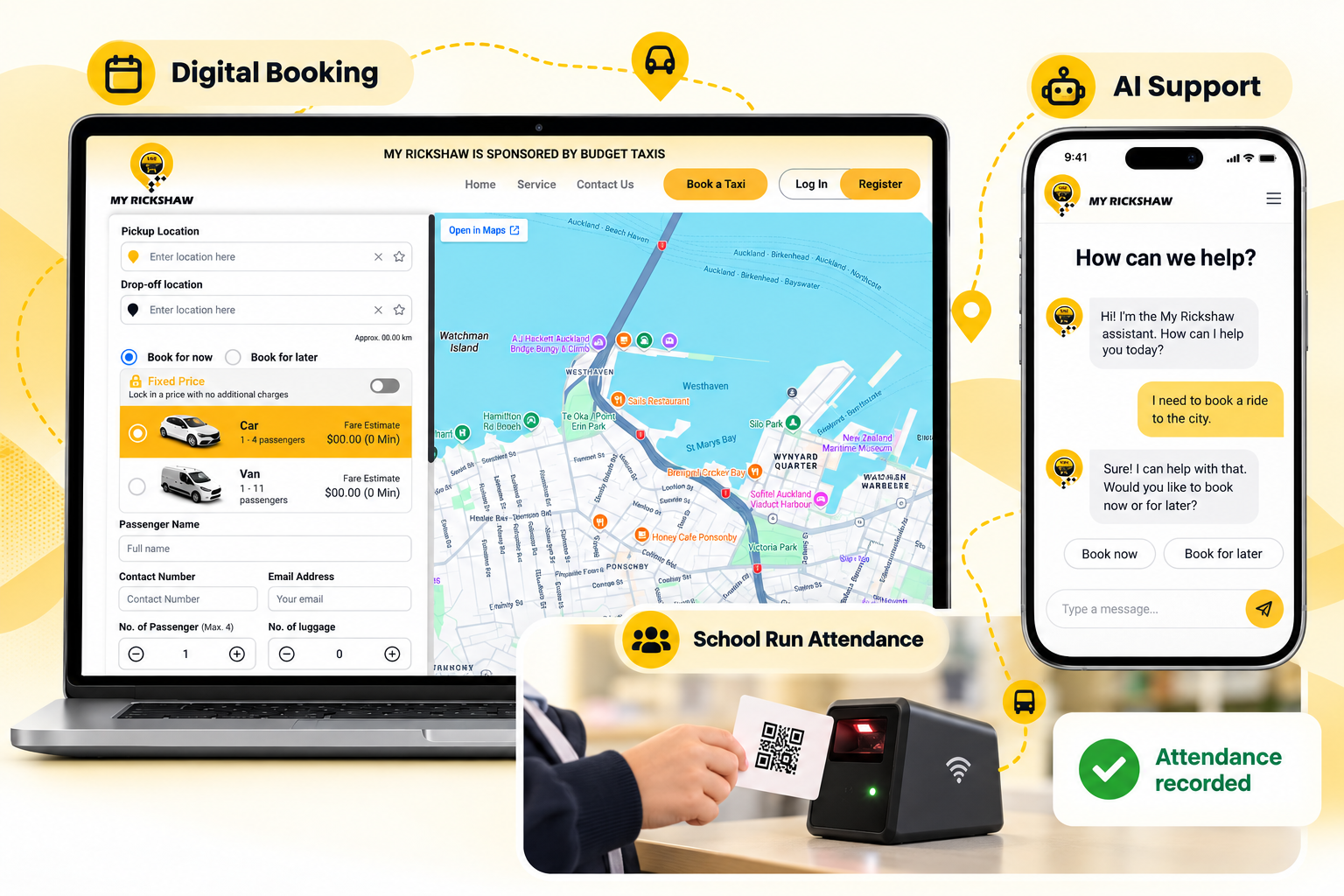
A passenger-transport booking contains more than a name and phone number. The service needs accurate pickup and drop-off details, timing, passenger and luggage counts, vehicle requirements and information that can affect the journey.
Rickshaw needed a customer-facing form that could guide users through these decisions and convert the information into a consistent digital booking request.
The goal was to turn a multi-step transport enquiry into one clear, responsive customer journey.
The interface combines route context, pricing information and service requirements in a form customers can use across desktop and mobile devices.
Pickup and destination details are captured alongside map context and approximate travel distance.
Customers can request transport immediately or choose a later date and time.
Car and van choices communicate passenger capacity and the estimated journey information.
The booking experience presents the estimated fare and supports a fixed-price preference.
Passenger numbers, luggage, flight information and special instructions are captured before submission.
Customers can identify baby-seat and hoist-van requirements within the same booking flow.
Rickshaw also required a practical way to capture attendance during school transport operations. Isoft integrated a barcode or QR scanner with a compact Wi-Fi-enabled edge device so scanned identifiers could be transmitted to the School Run application through an API.
This connected a physical action at the transport point with a structured digital attendance event in the operational system.
The value was not the scanner alone—it was connecting the scan reliably with the application where attendance information was required.
Isoft also integrated an AI chatbot into Rickshaw's digital environment, creating a conversational entry point that could support customer interactions alongside the existing web experience.
The case study does not assign enquiry-reduction, conversion or service-level results because those outcomes have not been independently confirmed.
The chatbot integration demonstrates how applied AI can sit alongside structured booking and operational workflows rather than operating as an isolated technology experiment.
Receive route details, passenger requirements, QR data or a chatbot interaction.
Convert the interaction into information the relevant workflow can process.
Move the information through the booking interface, API or integrated digital channel.
Make the captured information available to the corresponding transport operation.
The responsive interface keeps route entry, vehicle choice, fare information and passenger requirements accessible on the devices customers use when arranging transport.
The project image is based on Rickshaw's live booking workflow and uses the genuine Rickshaw identity with non-personal sample information.
View Rickshaw's Booking Form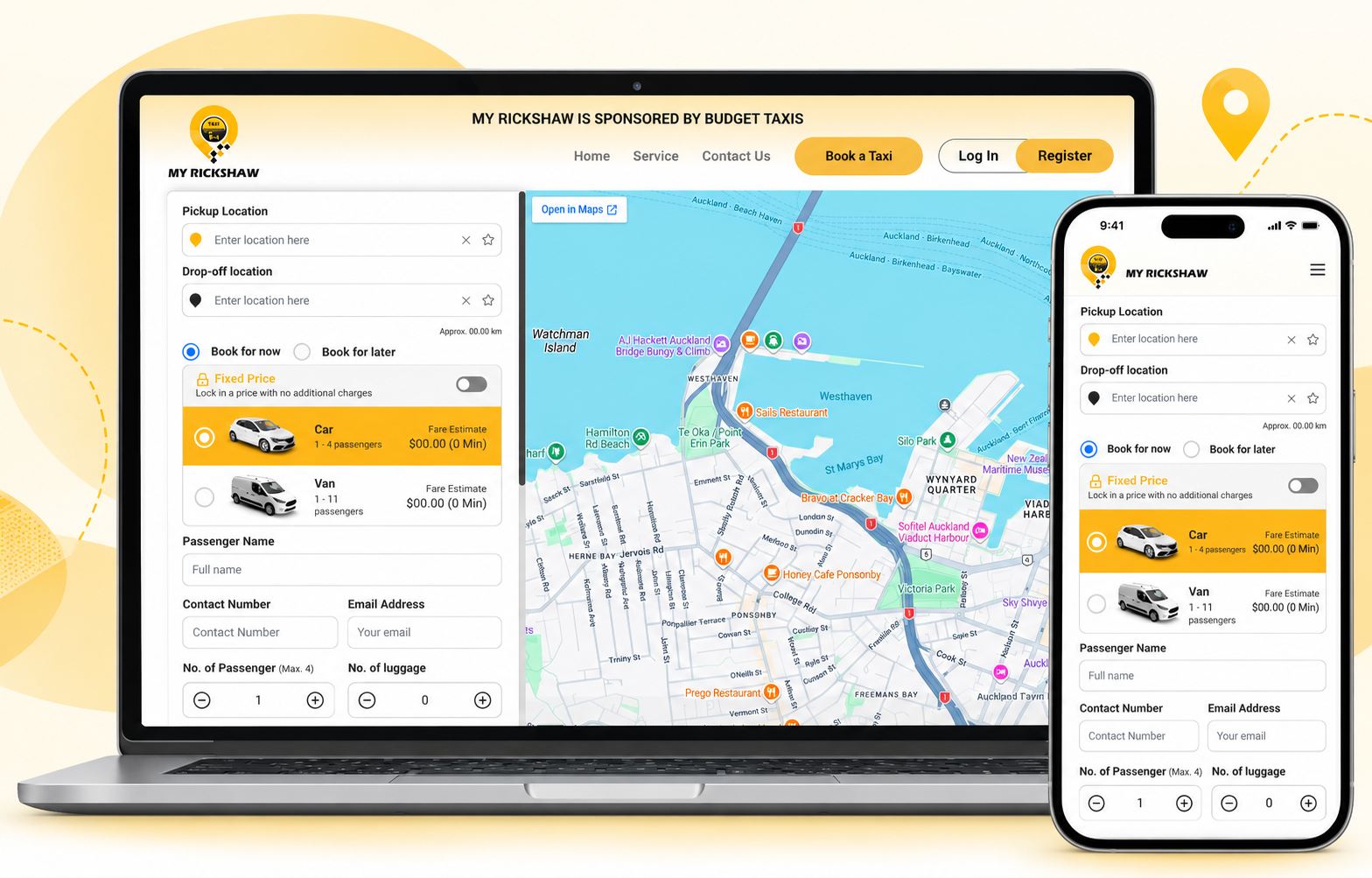
Across the three initiatives, Isoft helped Rickshaw capture and move information through customer booking, school-run attendance and AI-assisted customer interaction workflows.
This case study describes the Rickshaw booking workflow, School Run scanner integration and AI chatbot integration delivered by Isoft. It does not claim ownership of the wider dispatch platform or attach unverified attendance, enquiry-reduction, booking-volume, conversion, revenue or administration-saving figures. Hardware features that were discussed but not confirmed as delivered—including offline queuing, duplicate suppression and specific status indicators—are not claimed.
Book an Operational Systems Review to identify how booking, field capture, APIs and customer-service tools can work as one connected system.